By Ago Kitchens · Published
This is general guidance about flooring materials, whoever you hire. Products vary widely, so check the manufacturer's specifications, installation instructions, and warranty for the specific floor you choose.
What LVP and Tile Are
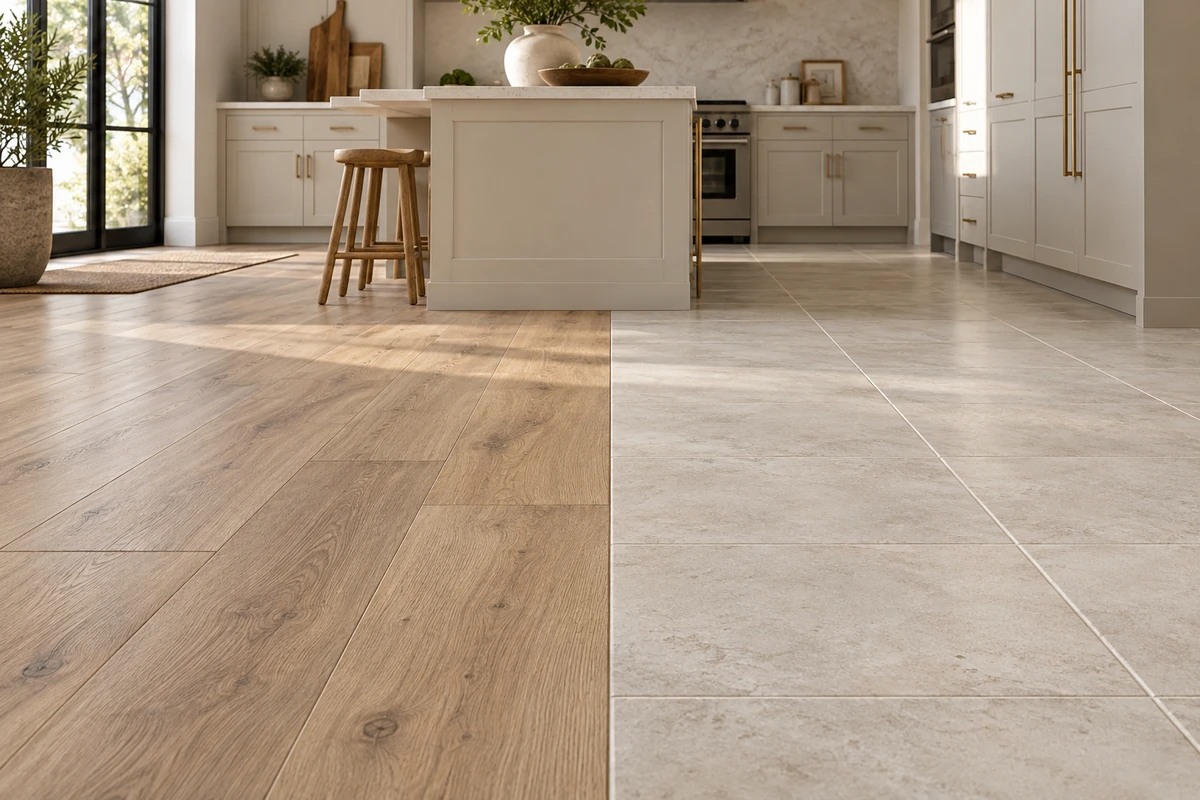
- Luxury vinyl plank (LVP) is a layered product: a clear wear layer on top, a printed design layer, and a core. Rigid-core planks (often called SPC or WPC) are stiff and usually click together as a floating floor; flexible planks are typically glued down.
- Tile for kitchen floors is usually porcelain or glazed ceramic, set in mortar with grout joints. Under the ANSI A137.1 standard, porcelain is tile that absorbs 0.5% water or less — a measure of how dense it is (see ANSI's explanation).
At a Glance
| Attribute | LVP | Porcelain / ceramic tile |
|---|---|---|
| Water at the surface | Resists water; seams and edges are the weak points | Tile resists water; cement grout absorbs unless sealed or epoxy |
| Underfoot | Softer, warmer, quieter | Hard and cool; dropped dishes usually break |
| Durability measure | Wear-layer thickness | Hardness and glaze rating for floors |
| Main damage risk | Scratches, dents, fading in strong sun for some products | Cracks if the floor flexes; chipped edges |
| Subfloor needs | Flat | Flat and stiff |
| Added height | Usually lower | Usually higher (tile, mortar, and any backer) |
| Radiant floor heat | Only within the maker's temperature limits | Well suited |
| Repairs | Replace planks | Replace individual tiles and regrout |
Water and Leaks
Kitchens are where floors meet dishwasher leaks, sink overflows, and refrigerator water lines. Both materials resist water at the surface, but neither makes the floor system underneath waterproof:
- LVP: rigid-core planks do not swell like laminate, but water can run through seams and around the edges and sit on the subfloor.
- Tile: porcelain barely absorbs water, but cement-based grout does unless it is sealed or an epoxy grout is used; a leak can still reach the subfloor through cracks or joints.
With either floor, fixing leaks quickly and checking under the sink and behind the dishwasher matter more than the material.
Comfort, Noise, and Dropped Dishes
LVP is softer and warmer underfoot and quieter to walk on, which many people notice during long cooking sessions. Tile is hard: it is tiring to stand on for long periods without a mat, and glasses and plates dropped on tile usually break. If someone in the house has joint pain or you spend hours on your feet in the kitchen, comfort may outweigh other factors.
Wear, Scratches, and Dents
- LVP durability depends heavily on the wear layer, measured in mils (thousandths of an inch). Manufacturers recommend thicker wear layers for heavier traffic — see Karndean's explanation of wear layers for an example. Heavy point loads such as appliance feet or chair legs can dent vinyl, so use protectors.
- Tile resists scratches well. Its weak points are cracking when the subfloor flexes and chipped edges from heavy impacts. For glazed tile, check that the manufacturer rates it for floor use and for your level of traffic.
Slip Resistance
Kitchen floors get wet. For tile, the ANSI A326.3 test measures wet dynamic coefficient of friction (DCOF); the standard's general benchmark is a wet DCOF of 0.42 or higher for level interior floors expected to be walked on when wet (see Crossville's explanation). Meeting the number does not guarantee a floor is right for every situation. For LVP, ask the manufacturer for slip-resistance information. With either material, glossy finishes are usually slicker when wet than matte or textured ones.
Subfloor, Height, and Cabinets
- Subfloor. Both need a flat subfloor. Tile also needs a stiff one; a floor that flexes can crack tile and grout. Older homes may need preparation before either.
- Height. Tile usually adds more height than LVP, which can trap a dishwasher under the counter and affect transitions to other rooms.
- Cabinets and islands. Tile can run under cabinets. Many floating LVP floors should not be pinned under heavy cabinets or islands; the manufacturer's instructions decide.
Our kitchen flooring page covers subfloor, appliance, and transition planning in more detail.
Repairs
A damaged LVP plank can be replaced — easier near a wall on floating floors and simpler on glue-down floors. A cracked tile can be cut out and replaced, though matching grout color takes care. For either, keep a few spare planks or tiles from the same production run, because colors and patterns change over time.
Minnesota Winters
- Cold floors. Tile feels cold in winter. Radiant floor heat works well under tile; many LVP products allow it only within the manufacturer's temperature limits.
- Salt and snowmelt. Grit tracked in from outside scratches softer surfaces, and salty water can stain grout. Entry mats help either floor.
- Humidity swings. Rigid-core LVP and tile are both more stable through dry winters and humid summers than solid hardwood.
Everyday Care
- LVP: sweep or vacuum grit, damp-mop with a cleaner the manufacturer approves, and use felt pads under furniture.
- Tile: sweep and damp-mop; keep grout clean and reseal cement grout as needed. Epoxy grout resists stains and does not need sealing.
Which Suits Your Kitchen?
- Comfort and quiet: LVP.
- Maximum hardness and scratch resistance: porcelain tile.
- Radiant floor heat: tile is the simpler pairing.
- An older floor that flexes: LVP is more forgiving, unless the floor is stiffened for tile.
- Matching an open floor plan: either, as long as heights and transitions to adjoining rooms are planned.
Cost depends on the product, subfloor preparation, removal of the old floor, pattern, and transitions; tile installation generally takes more labor than a floating LVP floor. We do not publish flooring prices — our cost guide explains how finishing elements add up.
Frequently Asked Questions
Is LVP waterproof?
Many luxury vinyl products are waterproof at the surface, and rigid-core planks do not swell like laminate. But water from a leak can still travel through seams and around the edges to the subfloor, so a "waterproof" plank is not a waterproof floor. Prompt cleanup of leaks matters with any flooring.
Is porcelain tile better than ceramic for a kitchen?
Porcelain is denser and absorbs very little water, so it is the more durable choice for most kitchen floors. Many glazed ceramic tiles also perform well on residential floors; check that the tile is rated for floor use and for the level of traffic in your kitchen.
Can LVP go over existing tile?
Sometimes, if the tile is flat, sound, and well attached and the manufacturer allows it. Deep grout lines may need to be filled so they do not show through, and the added height can affect the dishwasher and door clearances.
Which is better with dogs and kids?
Both can work. Tile resists scratches from claws but is hard on dropped dishes and on knees. LVP is softer, warmer, and quieter, but a thin wear layer can scratch, and heavy point loads can dent it. A thicker wear layer helps in busy households.
Choosing for Your Kitchen
The right floor depends on your subfloor, your appliances, and how the kitchen meets the rest of the house — things that are easiest to judge in person. Ago Kitchens offers kitchen flooring installation in Owatonna and nearby communities; to talk it through, call and see how a project starts.