Our Kitchen Flooring Service
Ago Kitchens installs kitchen flooring as a standalone project or as part of a full kitchen remodel. The flooring material, the condition of what is underneath, and the scope for your kitchen are discussed during the on-site consultation and set out in your written estimate, and your agreement is directly with Ago Kitchens.
The rest of this page is general information about kitchen flooring to help you compare options, whoever you hire. It is not a quote, and it does not describe a specific Ago Kitchens project or the specific materials or subfloor work for yours.
Kitchen Flooring Materials
| Material | Strengths | Watch for |
|---|---|---|
| Porcelain tile | Very durable and water-resistant; many looks, including wood and stone | Hard and cold underfoot; dropped dishes break; needs a stiff, flat subfloor |
| Ceramic tile | Water-resistant; wide range of styles | Softer glaze than porcelain on some products; grout needs care |
| Luxury vinyl plank or tile | Comfortable, quieter, water-resistant surface | Wear-layer thickness varies widely; heavy point loads and sun can affect some products |
| Laminate | Scratch-resistant wear surface; realistic wood looks | Many products are sensitive to standing water at seams; check the water-resistance rating |
| Hardwood | Warm; can continue from adjoining rooms; can often be refinished | Standing water and leaks damage it; moves with humidity |
| Engineered wood | Real wood surface on a layered core; more dimensionally stable than solid hardwood | Still vulnerable to slow leaks from a dishwasher or refrigerator line; thin wear layers limit refinishing |
| Sheet vinyl | Few seams; budget-friendly | Can dent and tear; fewer premium looks |
Choosing between the two most common options? See LVP vs. tile for kitchen floors. For any product, read the manufacturer's installation instructions and warranty terms — many warranties depend on how and where the floor is installed, including subfloor flatness, moisture limits, and whether cabinets sit on top of it.
Under the Cabinets or Around Them?
When cabinets are also being replaced, flooring can run under them or stop at them. Running under the cabinets makes future layout changes easier; stopping at the cabinets uses less material. Many floating floors — click-together luxury vinyl and laminate — are not meant to be pinned under heavy cabinets or islands, so the manufacturer's rules decide. If only the flooring is being replaced, the new floor usually stops at the existing cabinet bases and toe kicks.
Subfloor and Flatness
The finished floor can only be as flat and stiff as the subfloor beneath it. Tile needs a stiff floor to avoid cracked tile and grout, and rigid plank floors need a flat surface to lock together and not flex. Older homes may have high spots, dips, or damaged areas near the sink and dishwasher. The condition of the subfloor is something to assess in person, and any preparation needed should be spelled out in the estimate.
Minnesota Considerations
- Seasonal humidity. Indoor air swings from very dry in winter to humid in summer, so wood floors expand and contract. Hardwood typically needs to acclimate to the home and leave room for movement at the edges.
- Winter grit and snowmelt. Kitchens near an entry door see salt and water tracked in. Durable, water-resistant surfaces and good mats help.
- Cold floors. Tile over an unheated space or a slab can feel cold. Electric radiant floor heat is sometimes added under tile; it requires electrical work by licensed electricians.
Appliances and Transitions
- Dishwasher height. A new floor installed around the dishwasher raises the floor in front of it. If the opening becomes too short, the dishwasher can be hard to remove later. Check this before installation.
- Refrigerator and range. Appliances are typically moved out and back in; ask who handles disconnecting and reconnecting them, especially gas or water lines.
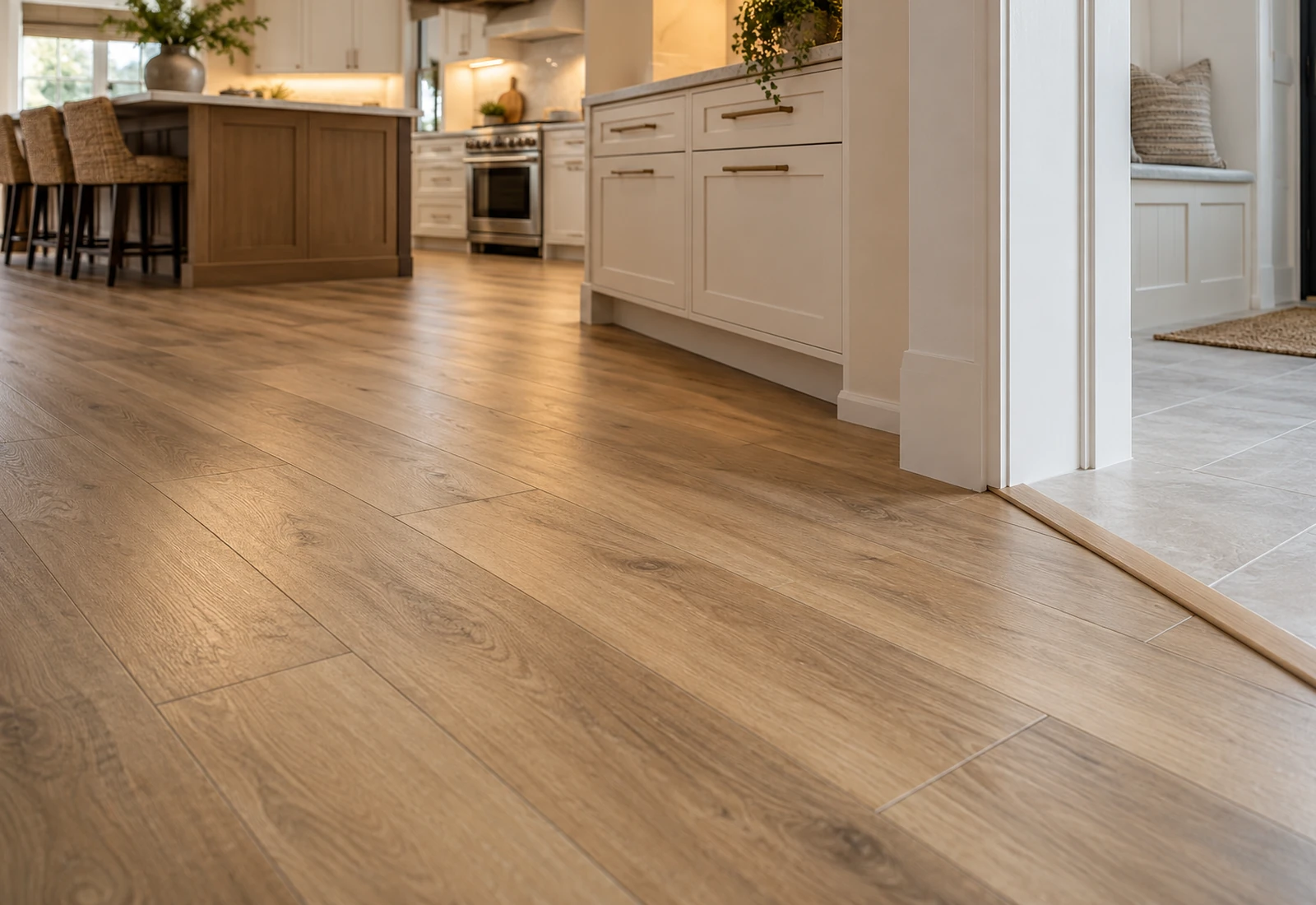
- Transitions. Where the kitchen meets other rooms, height differences are handled with transition strips. Planning heights early avoids tripping edges and doors that no longer clear the floor.
Removing Older Floors Safely
Vinyl floor tiles, sheet flooring, and some adhesives from older homes can contain asbestos. The EPA advises that material in good condition is usually best left undisturbed, and that it should not be sanded, scraped, or torn out until it has been checked. If your kitchen floor may be decades old, ask how it will be assessed before any removal.
What Affects a Flooring Estimate
- Square footage and the shape of the room, including closets and pantries
- The flooring material and its installation method
- Removing existing flooring and any subfloor preparation
- Moving appliances and working around existing cabinets
- Transitions, trim, baseboards, and how far the floor continues into adjoining rooms
We do not publish flooring prices. Our remodel cost guide explains how flooring fits into a kitchen budget.
Kitchen Flooring FAQs
What is the most water-resistant kitchen flooring?
Porcelain and ceramic tile and many luxury vinyl products resist water well. Water resistance at the surface is not the same as a waterproof floor system, though — a major leak can still get underneath through seams and edges. Laminate and hardwood are more sensitive to standing water.
Can I replace kitchen flooring without removing the cabinets?
Often, yes — new flooring is installed up to the existing cabinets and the toe kicks. The main things to check are how the new floor height affects the dishwasher and other appliances, and whether a floating floor can run up to the cabinets correctly.
Should the kitchen floor match the rest of the house?
In open floor plans, running one floor through the kitchen and adjoining rooms avoids awkward transitions. Where the kitchen is a separate room, a different, more water-resistant floor is common. Consider how heights will meet at doorways either way.
Do I need to remove my old vinyl floor?
Not always — some new floors can go over existing flooring that is flat and firmly attached. If the old flooring may be from before the 1980s, do not sand, scrape, or tear it out until it has been checked, since older vinyl flooring and adhesives can contain asbestos.
Getting Started
Call Ago Kitchens at 877-708-4271 to talk about kitchen flooring, on its own or as part of a larger kitchen project. After an initial project discussion, an on-site consultation looks at your kitchen in person, and you receive a written estimate. If you decide to go ahead, you sign a written agreement directly with Ago Kitchens before work begins — see how it works.
We work in Owatonna and in Medford, Faribault, Waseca, Blooming Prairie, and Austin. See service areas for the communities we cover.